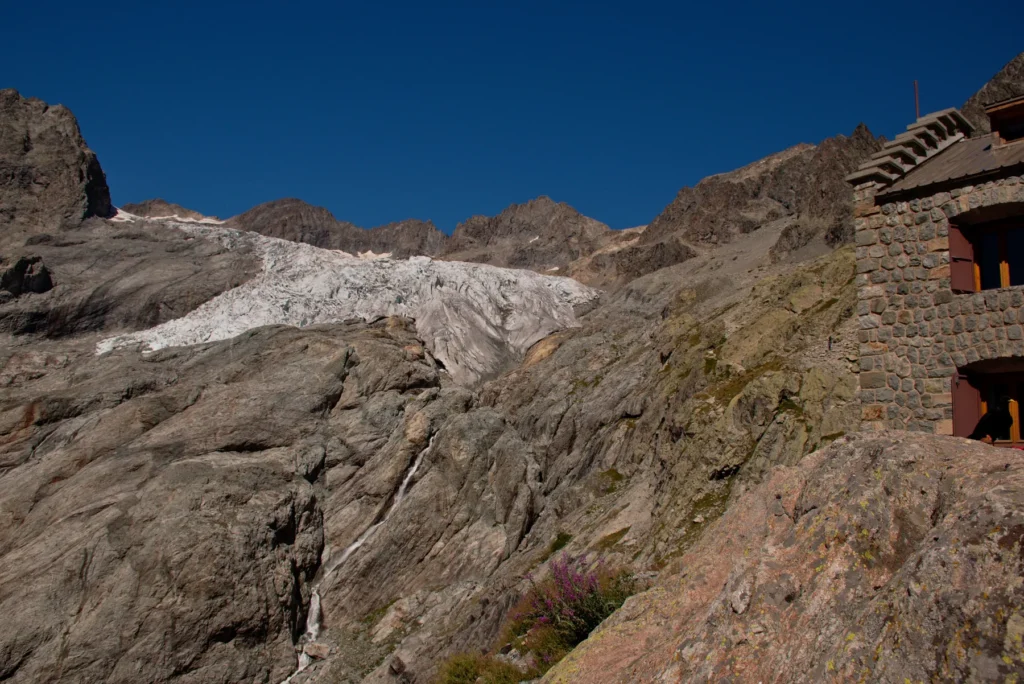

In the heart of the Écrins massif, the Glacier Blanc hike is an invitation to contemplation. From the Pré de Madame Carle, the mountains rise in all their majesty: rock, torrents, high-altitude light — everything contributes to a total immersion. It is one of the most famous hikes in the Vallouise-Pelvoux valley, but also one of the most accessible ways to glimpse the glacial world.
And if you take your time, if you choose the right season, this walk becomes much more than a simple outing: a true breath of fresh air.
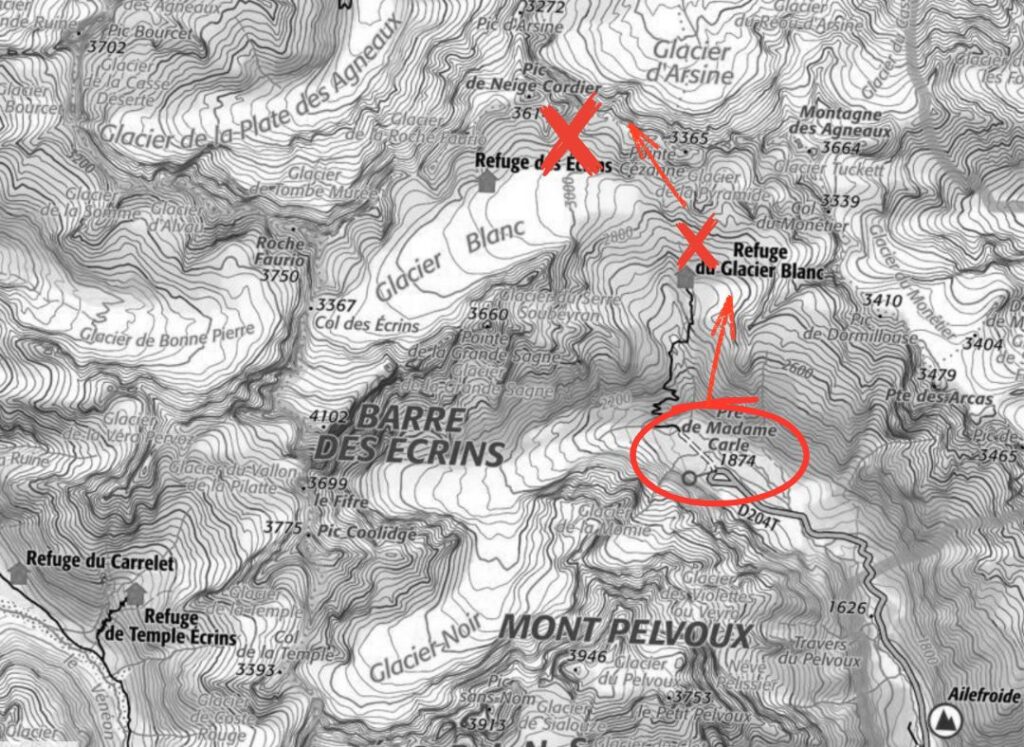
Where the mountains begin
The Pré de Madame Carle, at 1,874 meters, marks the boundary between the valley and the high mountains. Around it, the peaks of Ailefroide and Pelvoux form a striking mineral landscape.
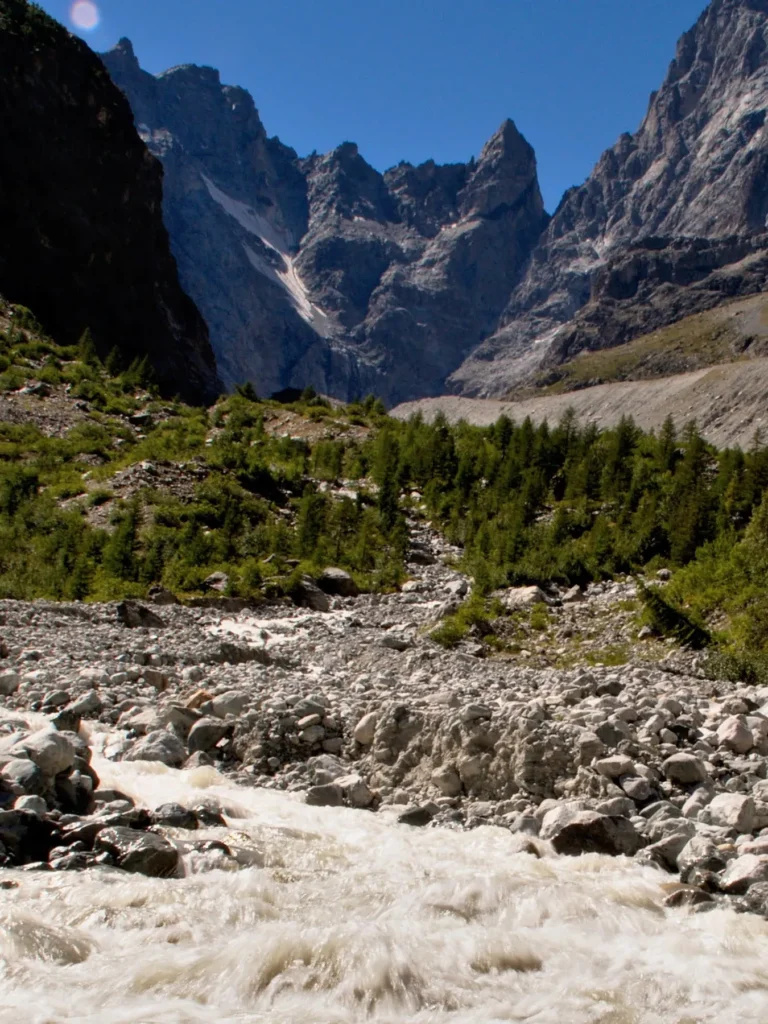
The light brushes the rock, glides across the slopes, while the rumble of the Glacier Blanc torrent accompanies the first steps. Here, hikers, mountaineers, and curious visitors cross paths — drawn by the presence of the glacier and the summits of the Écrins.
But this popularity has its downside. In summer, the site is very busy. To enjoy the calm and the colors, it is best to come outside school holidays — in June or in autumn — or to start very early in the morning. In the first hours of the day, the mountains still breathe in silence.
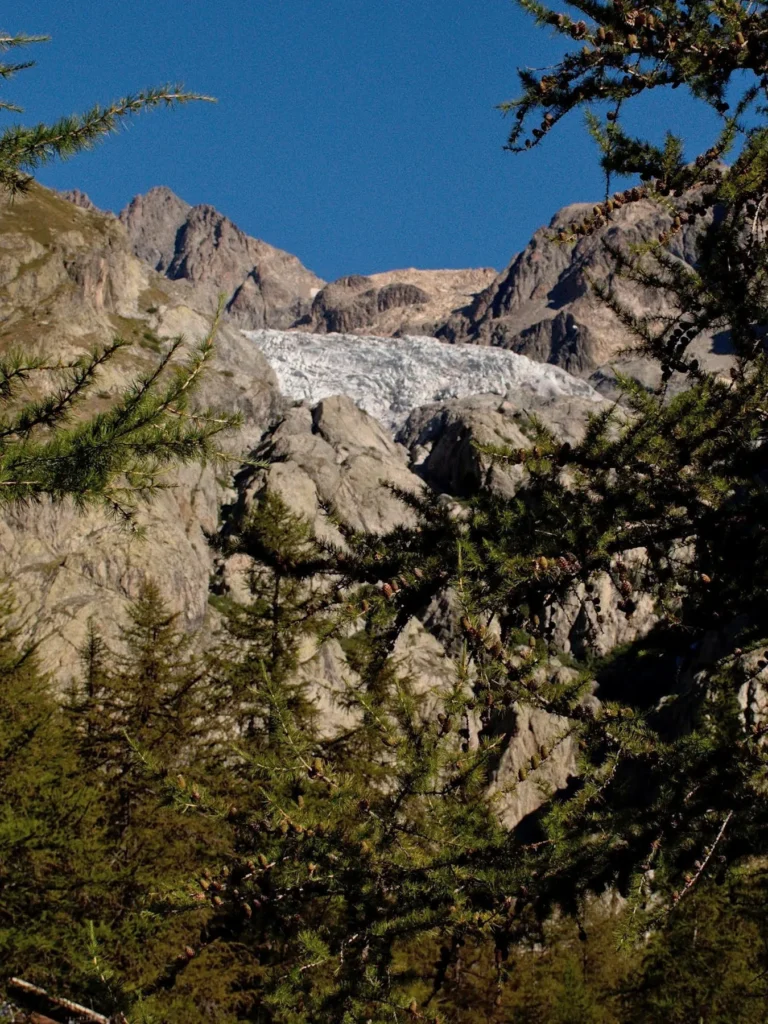
Glacier Blanc from Pré de Madame Carle
The Glacier Blanc trail
The trail first climbs in steady switchbacks, following the curve of a moraine. At each turn, the valley widens, revealing the moraine of the Glacier Noir, waterfalls, and the distant silhouette of Ailefroide.
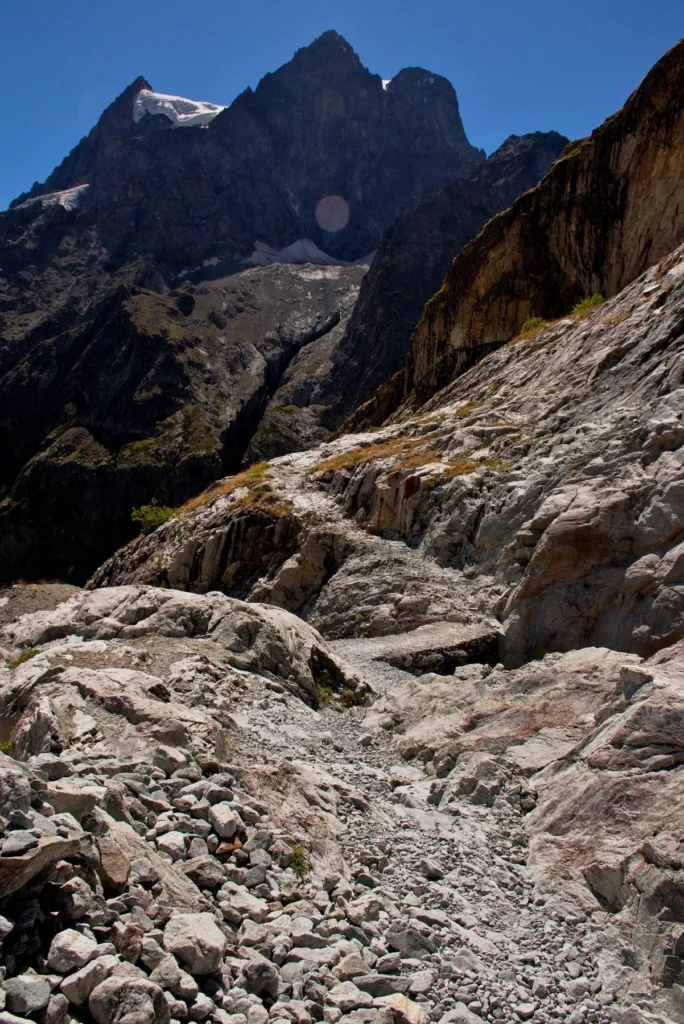
The path becomes more mineral as you gain altitude. Rocks polished by ice bear witness to the glacier’s ancient passage.
After about two hours of walking, the Glacier Blanc refuge comes into view, perched at 2,542 meters. It is an ideal stop to watch rope teams, enjoy a picnic, or simply soak in this unique high-altitude atmosphere.
Here, the mountain feels close — but never familiar. You sense its presence, its breath, its quiet strength.
The Belvédère des Écrins: extending the hike
From the refuge, a small path climbs above the moraine. This is the route to the Belvédère des Écrins — a spectacular viewpoint reserved for experienced hikers.
The terrain becomes more chaotic: boulders, scree, sometimes faint tracks. You must take your time, choose your steps carefully, and follow the cairns that guide the ascent.
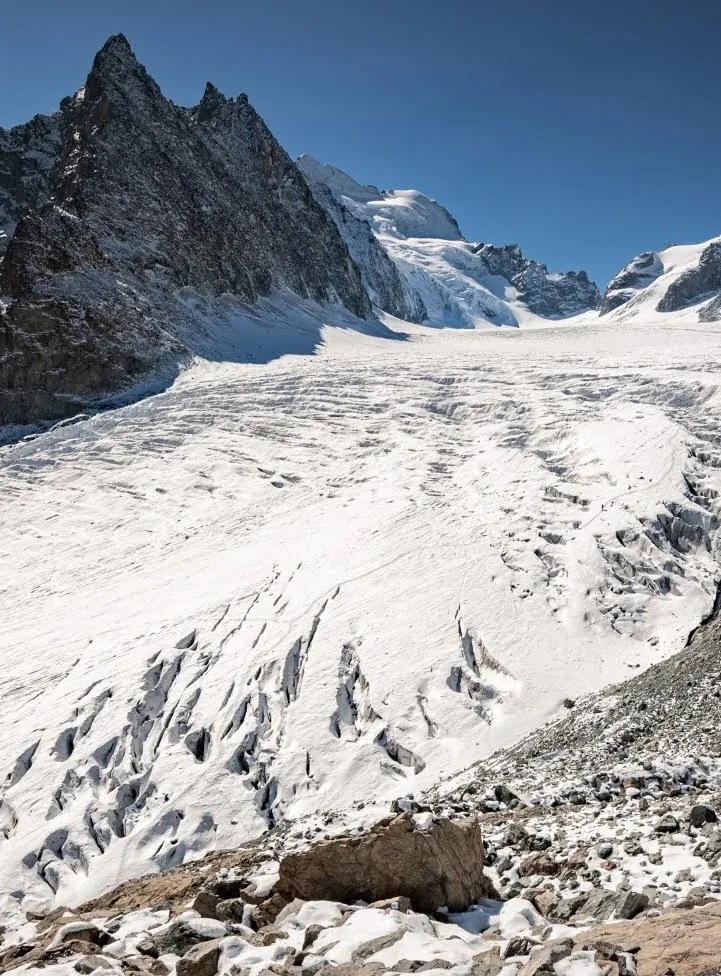
At nearly 3,000 meters, the panorama opens onto the glacier of the same name and the great peaks of the massif. The scene is striking: a sea of ice, an almost unreal silence, and light that changes every minute.
This is the realm of wind, ice, and time.
Glacier Blanc, photo by Rafal Buczynski
The seasons of Glacier Blanc
Glacier Blanc reveals itself differently with each season. In early summer, alpine flowers color the slopes. The waterfalls of the Glacier Blanc torrent bring the valley to life. In autumn, snow already brushes the summits, the light softens, and deep golden shadows are cast across the rock faces. In winter, for seasoned ski tourers, the mountain regains its absolute purity. Silence reigns, and tracks replace trails. Visiting in the shoulder seasons means experiencing the mountains differently: without haste, with time to observe, breathe, and feel.
Taking the time
On the way down from the Belvédère, the valley opens up once again. Larches, torrents, and villages come back into view. The silence of the ice gives way to the rustling of the wind.
It is here, in an authentic hamlet of the Hautes-Alpes, that some choose to extend the experience. A quiet evening, a crackling fire, a window open onto the peaks.
Here, the mountains are also lived through rest, slowness, and a simple attentiveness to everything around us.
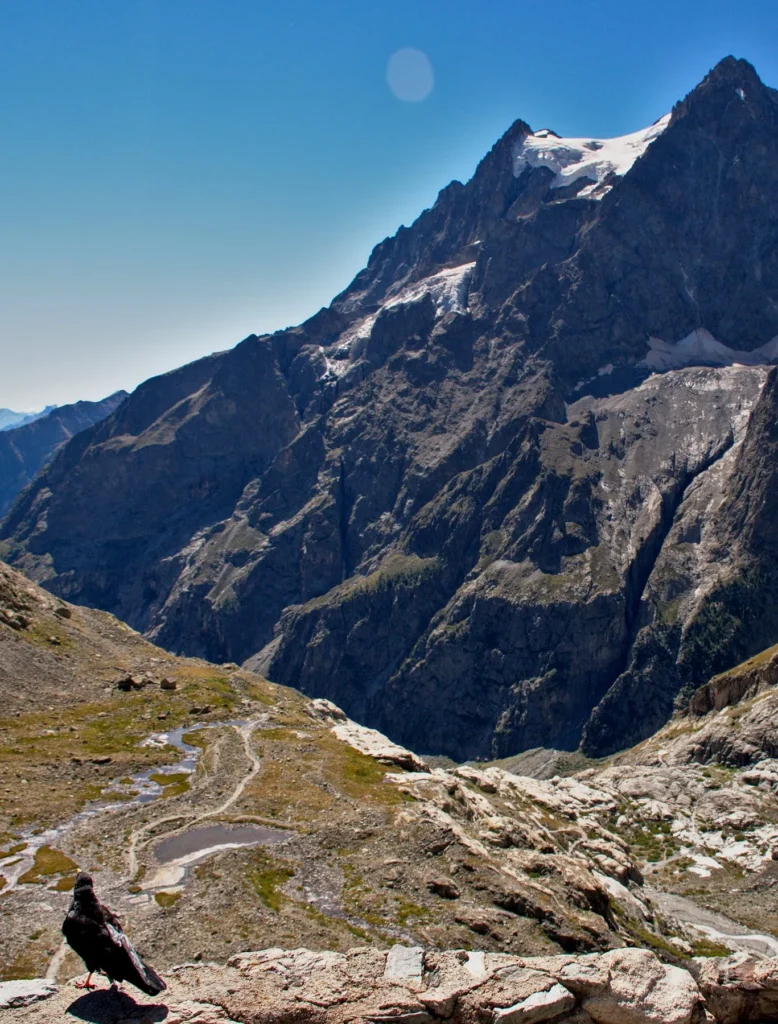
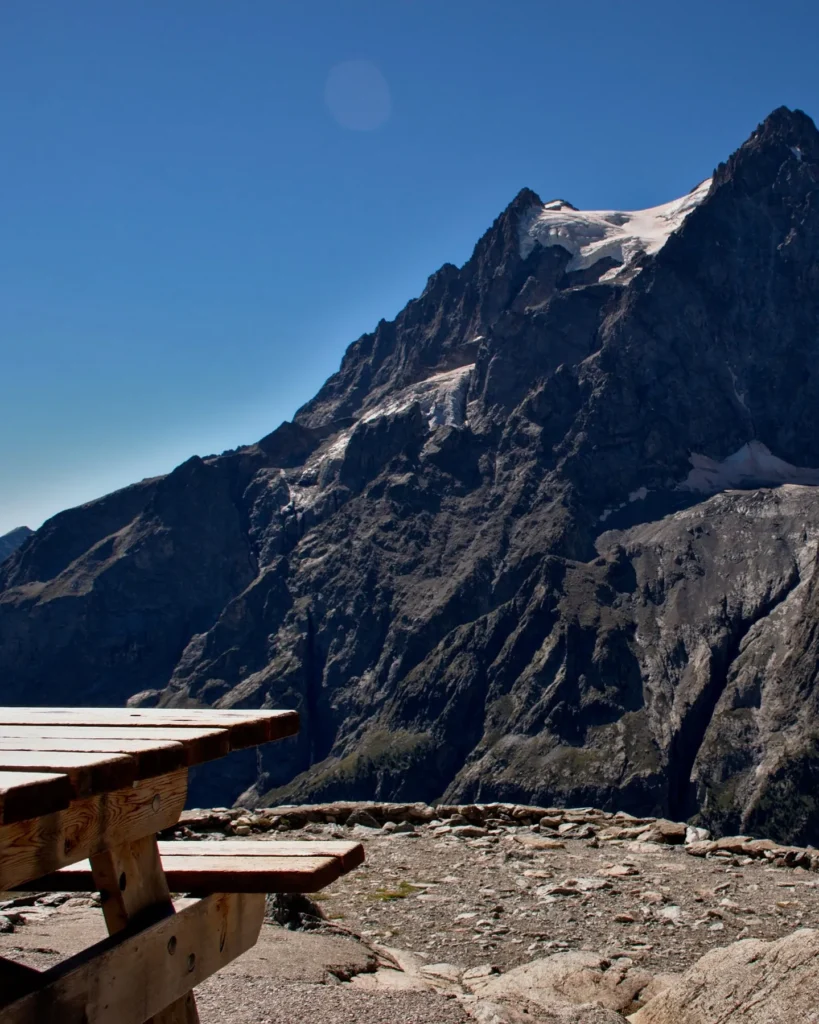
Mount Pelvoux from the Glacier Blanc refuge
The Glacier Blanc hike is not just a walk toward the high mountains. It is an encounter with the Écrins in their truest form: light, silence, and verticality.
Choosing the right season, starting early, taking the time to climb to the Belvédère des Écrins… all are ways to make this hike unforgettable.
Because in the Écrins, beauty lies not only in the landscape — but in the way you look at it.